
Financial markets worldwide experienced significant movements this week as central banks and governments unveiled new economic policies aimed at addressing inflation, supporting growth, and stabilizing currencies. Investors are closely monitoring these developments, which could reshape investment strategies for the coming months.
Policy Changes and Market Reactions
1. Trended Data is the king
Advice from experts:
Don’t rush to close old credit cards. In the 2026 algorithm, “Average Age of the account” accounts for 15% of the score weight.
2. Buy in advance pay later (BNPL) is included in the point
Loans from Affirm, Klarna will now appear on the credit report. If you use OVCredit to import reports, you will see this item appear in the “Other Loans” section.
“If you only pay the minimum (Minimum Payment) continuously for 6 months, even if it is not late, your score will still be deducted more severely than before.” – Dr. Alex Tran

Sector performance has been particularly interesting. Technology stocks have rebounded strongly, with major tech companies reporting robust earnings. The energy sector has also performed well, benefiting from supply constraints and strong demand. However, real estate and consumer discretionary sectors have faced headwinds due to higher interest rates and inflation concerns.
Currency markets have been equally active. The U.S. dollar has strengthened against most major currencies, reflecting the Fed’s relatively hawkish stance compared to other central banks. This has implications for international trade, corporate earnings, and emerging market economies that rely on dollar-denominated debt.
Investment Implications
Advice from experts:
Don’t rush to close old credit cards. In the 2026 algorithm, “Average Age of the account” accounts for 15% of the score weight.
Sector performance has been particularly interesting. Technology stocks have rebounded strongly, with major tech companies reporting robust earnings. The energy sector has also performed well, benefiting from supply constraints and strong demand. However, real estate and consumer discretionary sectors have faced headwinds due to higher interest rates and inflation concerns.
Currency markets have been equally active. The U.S. dollar has strengthened against most major currencies, reflecting the Fed’s relatively hawkish stance compared to other central banks. This has implications for international trade, corporate earnings, and emerging market economies that rely on dollar-denominated debt.
Looking ahead, several trends bear watching. Inflation data will continue to influence policy decisions, and any surprises could trigger market volatility. Corporate earnings season will provide insights into how businesses are navigating current economic conditions. Geopolitical developments remain a wild card that could impact markets unexpectedly.
For those approaching retirement or with shorter investment horizons, capital preservation becomes paramount. This may mean shifting toward more conservative allocations, focusing on dividend-paying stocks, and maintaining higher cash positions. Younger investors with longer time horizons can afford to take more risk and may benefit from market volatility through dollar-cost averaging.
Key Takeaways
Market conditions remain dynamic, requiring investors to stay informed and adaptable. While policy changes create uncertainty, they also present opportunities for those who understand the underlying fundamentals. The key is maintaining a balanced approach, focusing on long-term goals, and avoiding reactionary decisions based on short-term market movements.
As always, consulting with financial advisors and conducting thorough research before making investment decisions is crucial. Markets will continue to evolve, and successful investors will be those who can navigate change while staying true to their investment principles and risk tolerance.
Amidst the relentless and unceasing hustle of modern life, it seems humans are becoming increasingly exhausted. This exhaustionis not merely muscular fatigue, but a desolate emptiness echoing within thesoul. We live in an era where digital connection reigns supreme, yet our connection with ourselves has become more tenuous than ever. Eachday, we don masks of stability and wear performative smiles to face colleagues, society, and even our loved ones. We are so busy chasing deadlines, financial goals, and standards of success that we inadvertently neglect the child cowering in the depths of our minds: our true emotions. Many of us operate like smooth-running but soulless machines, terrifiedof facing sadness or vulnerability, gradually losing the ability to love ourselves without even realizing it.
Amidst the relentless and unceasing hustle of modern life
Amidst the relentless and unceasing hustle of modern life, it seems humans are becoming increasingly exhausted. This exhaustionis not merely muscular fatigue, but a desolate emptiness echoing within thesoul. We live in an era where digital connection reigns supreme, yet our connection with ourselves has become more tenuous than ever. Eachday, we don masks of stability and wear performative smiles to face colleagues, society, and even our loved ones. We are so busy chasing deadlines, financial goals, and standards of success that we inadvertently neglect the child cowering in the depths of our minds: our true emotions. Many of us operate like smooth-running but soulless machines, terrifiedof facing sadness or vulnerability, gradually losing the ability to love ourselves without even realizing it.
To begin the journey of finding refuge in oneself, the prerequisite is to correctly understand emotions and stop suppressing them. Emotions, whether happy or sad, jubilant or angry, are essentially signals, messengers delivering dispatches from the inner world to our consciousness. We often make a grave mistake by strictly categorizing emotions into “positive” and “negative” camps. We eagerly embrace joy but reject and drive away sadness or anxiety, believing themto be signs of weakness. However, emotions are like flowing water; if we keep building dams to block and suppress them, the water will rise and eventually breach the levees, creating a sweeping flood that devastates the mind. Burying trauma or sorrow does not make them disappear; it only causes the wounds to fester in silence, eroding our life energyandturning us into ticking time bombs ready to shatter at the slightest stumble. When the mind’s endurance reaches its limit, the human psyche begins toemit “SOS signals” that are easy to overlook if we lack sensitivity. The most obvious sign is a loss of motivation; hobbies that once fascinated us suddenly become meaningless, and waking up feels like heaving an invisible boulder just to get out of bed. Next comes a shift intemperament; we become irritable and frustrated with trivial matters, asif the whole world is conspiring against us. This is not peevishness; it is thescream of an overloaded soul. More dangerous is the tendency to withdraw, cutting off communication with the outside world due to a feeling of being misunderstood or a fear of being a burden. These signsare not pathologies to be hidden, but urgent reminders that: It is time for
you to stop and embrace yourself.
Learning to face and care for emotions is a crucial survival skill, yet onerarely taught. The first and most important step is “labeling the emotion.”Instead of saying “I’m fine,” have the courage to admit “I am feeling disappointed,” “I am anxious,” or “I am lonely.” When you call a demonby its true name, it becomes less terrifying; similarly, when you identify an emotion, you begin to detach yourself from it to observe rather than being drowned by it. Find a healthy outlet, such as journaling to pour out tangled thoughts onto paper, or finding a trusted person to share with. Incases of overwhelming pain, seeking help from a psychologist is a brave act, demonstrating the highest responsibility toward oneself. Do not let social prejudices stop you from finding the remedy for your soul.
Finally, we need to redefine the concept of self-love more correctly and profoundly. Loving yourself is not selfishness; it is not solely about personal gain or indulging in bad habits. Self-love is knowing how to establish healthy boundaries. It is the ability to say “no” to demands that drain your energy, and to refuse toxic relationships that erode your self- worth. Loving yourself means accepting that you are not perfect, that you have the right to be wrong, to stumble, and to rest. Only when your cupisfull of love and peace can you fully pour those good things out to others. In the long and wide journey of a human life, caring for mental health is as important and urgent as, if not more than, caring for physical health. A robust body becomes meaningless if it houses a shattered and exhausted soul. Listening to your emotions is the first step, the solid foundation for building a happy and free life. Do not wait until your soul falls ill to start
treatment. Learn to listen to the small voice inside you starting today, because you, with all your joys and sorrows, are always worthy of
understanding and love.
Libras strive for balance in everything, always choosing peaceful solutions and maintaining mutual respect.
Personality strengths
Libras strive for balance in everything, always choosing peaceful
solutions and maintaining mutual respect. A drive for fairness compels Libras to prioritize objectivity in analysisand comprehensiveness when collecting data. They are excellent listeners capable of offering advice at variouspsychological levels, even if they have not personally experiencedsimilar
emotions. They possess a love for beauty in every aspect of life, including romance, work, and personal style.
Libras know how to combine familiar elements to create breakthroughideas.
Illusions of love often begin with romantic cinematic scenes, whereloveis defined by skipped heartbeats, grand confessions, or an overwhelming sensation akin to dazzling fireworks in the night sky. We enter relationships with the expectation that this intense passion will last forever, only to be met with disillusionment when faced with the starkreality of ordinary days.
Illusions of love often begin with romantic cinematic scenes, whereloveis defined by skipped heartbeats, grand confessions
Illusions of love often begin with romantic cinematic scenes, whereloveis defined by skipped heartbeats, grand confessions, or an overwhelming sensation akin to dazzling fireworks in the night sky. We enter relationships with the expectation that this intense passion will last forever, only to be met with disillusionment when faced with the starkreality of ordinary days. When the initial vibrations fade, leaving behind the void of boredom and mundane responsibilities, many hastily concludethat love has died. However, the collapse of most relationships stems not from a lack of love, but from a lack of understanding regarding the true nature of connection. We are taught how to solve complex mathematical problems, yet we remain completely clueless about how a heart operates, leading us to love with wild instinct rather than with understanding and emotional intelligence. Mature love, in essence, is not a storm of emotion
that comes and goes, but a gentle river patiently flowing over the rapids of life.
The most critical shift toward sustainable love is distinguishing clearly between the “feeling of love” and “committed attachment.” The feeling of love is biological, a cocktail of hormones and sexual attraction that makes us crave someone’s presence 24/7 in the early stages. But commitment isa conscious choice. A mature person understands that love is not a noun, but a verb requiring continuous action every single day. It is choosing to hold your partner’s hand even when they are at their worst; it is the patience to listen to repeated stories; it is washing dishes and cleaning the house together rather than just dining at fancy restaurants. The difference lies here: Childish love seeks self-gratification, while mature love seekspeace and the building of shared values for both.
In the journey of building that connection, communication is the life line that nourishes the relationship. The tragedy of many couples is the expectation that their partner must possess “mind-reading” abilities, understanding what they want without a word being spoken. When needs are not met, instead of frankly sharing, “I need you to spend quality time with me this weekend,” we choose silence, sulking, or sarcasm. “Punitive silence” is the poison that kills love fastest. It creates an icy wall separating two souls, leaving the partner feeling isolated and confused. Adults in love do not play mind games. They learn to name their needs clearly without accusation. They understand that voicing a desire to be loved is not weakness or begging, but a way of guiding their partner on how to love them properly.
Alongside harmony, an interesting paradox of enduring love is the ability to maintain personal boundaries. Many mistakenly believe that loving means dissolving into one another, that “two” become “one.” But inreality, a healthy relationship is like two great trees standing side byside: their roots may intertwine underground, but their canopies must independently reach for the sunlight. Dissolving oneself, abandoning hobbies, friends, or personal dreams to chase after a lover will only lead to suffocation and the loss of initial attraction. Mature love respects private space, respects differences, and encourages the partner to develop into the best version of themselves. Only when each person is whole and happy with their personal life can they have enough positive energy to nurture the shared relationship. No one can be fully responsible for another’s happiness; we can only be companions who share in that happiness.
Finally, the true measure of love’s mettle lies in how two people face difficulties and conflicts. There is no couple that does not argue, but the difference lies in how they argue. Instead of attacking each other’s character with hurtful words like “You always…” or “You never…”, mature individuals focus on resolving specific problems. They argue to find a solution, not to win. And sometimes, the ultimate maturity in love lies in knowing when to let go. There are relationships that have completed their mission, when two people no longer share the same value system or direction. Letting go at this point is not failure, but the final act of respect for one another, giving both the chance to find true happiness. Love is not a destination for rest, but an environment for self-cultivation and growth. A true love will not make you pathetic or small, but will serve as a launchpad to help you become steadier, more tolerant, andmore profound. It does not loudly show off on social media, nor does it need empty, grandiose vows; it is silently present in every gesture of care, in understanding without words. It is the enduring resilience that withstands the passage of time, where, after all the storms of life, we feel at peace knowing there is always someone there, ready to grow old with us.

When holding a Job Description (JD), we are often captivatedbythebullet points regarding expertise: fluency in foreign languages, officecomputer skills, or experience operating complex software. Millions of
students graduating each year strive to polish these "hard skills,"believing them to be the master key to opening the door to success.
When holding a Job Description (JD), we are often captivatedbythebullet points regarding expertise:
When holding a Job Description (JD), we are often captivatedbythebullet points regarding expertise: fluency in foreign languages, officecomputer skills, or experience operating complex software. Millions of
students graduating each year strive to polish these “hard skills,”believing them to be the master key to opening the door to success. However, the harsh reality of the labor market has proven a different truth:
Professional expertise might get your foot in the door and help youpassthe interview, but it is the invisible “soft skills”, those never specificallylisted in a JD, that determine how far you will go, or whether youwill
soon be weeded out. The corporate environment is not an examroomwhere right and wrong are based on textbooks; it is a complex ecosystemof relationships, pressures, and ever-changing variables. Therefore, learning the profession is not enough; to survive and thrive, workers needto equip themselves with a much more comprehensive survival toolkit.
The first and most core skill, often confused with mere punctuality, istime management and work organization. In a world besiegedbydistraction from all sides, the capacity for deep work becomes a massivecompetitive advantage. Time management is not simply creatinga long”To-do list” and trying to cross items off; it is a mindset of prioritization. An effective worker is not the one who does the most, but the one whoknows how to choose the right important tasks and has the courage tosay”no” to trivial ones. It is the skill of allocating energy to avoid burnout, and knowing how to organize workflows scientifically to optimizeperformance. Your boss will never hold your hand to teach you howtoorganize files or break down a large project; these are the “unwrittenrules” you must learn yourself to prove your professionalism.
Next, teamwork and office communication serve as the adhesivethat
keeps the organizational machine running smoothly. Many talentedindividuals become “toxins” within an organization due to oversizedegosor a lack of emotional intelligence (EQ). Teamwork is not just splittingtasks where everyone does their part; it is the ability to lower one’s egotolisten to opposing views, and the negotiation skills to find commonground amidst conflicting interests. Office communication requiresasubtlety far beyond standard grammatical rules: it is knowing howto”read the room” in a meeting, knowing when to speak up and whentoremain silent, knowing how to present ideas persuasively, and knowinghow to give constructive feedback. A good employee not only completestheir own work well but also knows how to coordinate rhythmically, creating a positive atmosphere and supporting teammates intheir
development.
However, all the above skills are rendered meaningless without a critical foundation: work attitude and a sense of responsibility. This is the factor that clearly distinguishes a “bare minimum” employee froma core asset.
A sense of responsibility is demonstrated through an ownership mindset, treating the company’s work as if it were your own. It is proactivelyfinding solutions when problems arise instead of waiting for directions or blaming circumstances. A professional work attitude also includesintegrity, commitment to output quality, and respect for organizational discipline. In the eyes of leaders, skills can be trained, but attitudeisnotoriously difficult to alter. An employee with a progressive, positiveattitude and high responsibility is always the most valuable asset that every business wants to retain.
Finally, in an era where human knowledge changes by the second, theability to self-learn and adapt is the shield protecting your career fromtherisk of being replaced by AI or new technology. What you learninuniversity may become obsolete after just a few years. Therefore, thecompetence of “learning to learn,” and the ability to unlearn old mindsetsto relearn new ones, is extremely important. Agility helps youavoidshock before unexpected market changes or internal restructuring. Peoplewith high adaptability see opportunity in crisis, rather than complainingor fearing. They are always in a mindset of readiness to upgradethemselves, curious about the new, and unafraid to step out of their
comfort zone to challenge their own limits.
A sustainable career is not built on the dry lines of a job description, but
is cultivated from the inner depth of each individual. If expertise is theengine that makes the car run, then soft skills and attitude are the steeringwheel and lubricant that help the car go in the right direction and operatedurably on the long road. Do not wait for someone to teach youthesethings. Proactively observe, practice, and accumulate themevery day. For while titles may be bestowed, true respect and professional status belongonly to those who know how to perfect themselves fromthe smallest thing, the things never written on paper.

Smart cities leverage technology to improve efficiency, reduce costs, and enhance quality of life. Sensors monitor air quality in real-time, traffic lights adjust based on actual flow patterns, and waste management systems optimize collection routes. These innovations aren't just convenient—they're essential for managing resources in an increasingly crowded world.
Barcelona has emerged as a leader in smart city initiatives. The city installed thousands of sensors to monitor everything from parking availability to noise levels. This data helps city planners make informed decisions about infrastructure, public services, and environmental policies. The result is a more responsive, efficient urban environment.
The Smart City Revolution
As the world’s population continues to urbanize, cities face unprecedented challenges and opportunities. By 2050, nearly 70% of humanity will live in urban areas, creating a pressing need for sustainable, intelligent, and inclusive city planning.
The Smart City Evolution
As the world’s population continues to urbanize, cities face unprecedented challenges and opportunities. By 2050, nearly 70% of humanity will live in urban areas, creating a pressing need for sustainable, intelligent, and inclusive city planning.

“The city of the future is not built with concrete and steel alone—it’s built with ideas, innovation, and the collective will to create something better.”
— Urban Planning Expert, 2024

The Smart City Revolution
Urbanization brings significant challenges: housing shortages, traffic congestion, pollution, and social inequality. However, cities are developing innovative solutions. Tokyo’s efficient public transportation system moves millions daily with remarkable punctuality. Amsterdam’s cycling infrastructure has made it one of the world’s most livable cities.
Affordable housing remains one of the most pressing issues. Cities like Vienna have addressed this through social housing programs that provide quality, affordable homes for a significant portion of the population. These models show that with political will and creative thinking, housing crises can be addressed.
Climate change adaptation is another critical challenge. Cities are implementing green infrastructure, from rooftop gardens to permeable pavements, to manage stormwater and reduce heat island effects. These nature-based solutions are often more cost-effective and environmentally friendly than traditional approaches.

The Smart City Evolution
The future of cities depends on our ability to balance growth with sustainability, innovation with equity, and technology with humanity. The cities that succeed will be those that prioritize the well-being of all residents while embracing the tools and ideas that can make urban living better for everyone.
As we look ahead, it’s clear that the cities of tomorrow will be fundamentally different from those of today. They’ll be more connected, more sustainable, and more responsive to the needs of their inhabitants. The question isn’t whether cities will change—it’s whether we’ll guide that change toward a better future.
“The city of the future is not built with concrete and steel alone—it’s built with ideas, innovation, and the collective will to create something better.”
— Urban Planning Expert, 2024
Smart cities leverage technology to improve efficiency, reduce costs, and enhance quality of life. Sensors monitor air quality in real-time, traffic lights adjust based on actual flow patterns, and waste management systems optimize collection routes. These innovations aren’t just convenient—they’re essential for managing resources in an increasingly crowded world.
Barcelona has emerged as a leader in smart city initiatives. The city installed thousands of sensors to monitor everything from parking availability to noise levels. This data helps city planners make informed decisions about infrastructure, public services, and environmental policies. The result is a more responsive, efficient urban environment.
The Smart City Revolution
As the world’s population continues to urbanize, cities face unprecedented challenges and opportunities. By 2050, nearly 70% of humanity will live in urban areas, creating a pressing need for sustainable, intelligent, and inclusive city planning.
The Smart City Evolution
As the world’s population continues to urbanize, cities face unprecedented challenges and opportunities. By 2050, nearly 70% of humanity will live in urban areas, creating a pressing need for sustainable, intelligent, and inclusive city planning.
“The city of the future is not built with concrete and steel alone—it’s built with ideas, innovation, and the collective will to create something better.”
— Urban Planning Expert, 2024
The Smart City Revolution
Urbanization brings significant challenges: housing shortages, traffic congestion, pollution, and social inequality. However, cities are developing innovative solutions. Tokyo’s efficient public transportation system moves millions daily with remarkable punctuality. Amsterdam’s cycling infrastructure has made it one of the world’s most livable cities.
Affordable housing remains one of the most pressing issues. Cities like Vienna have addressed this through social housing programs that provide quality, affordable homes for a significant portion of the population. These models show that with political will and creative thinking, housing crises can be addressed.
Climate change adaptation is another critical challenge. Cities are implementing green infrastructure, from rooftop gardens to permeable pavements, to manage stormwater and reduce heat island effects. These nature-based solutions are often more cost-effective and environmentally friendly than traditional approaches.
The Smart City Evolution
The future of cities depends on our ability to balance growth with sustainability, innovation with equity, and technology with humanity. The cities that succeed will be those that prioritize the well-being of all residents while embracing the tools and ideas that can make urban living better for everyone.
As we look ahead, it’s clear that the cities of tomorrow will be fundamentally different from those of today. They’ll be more connected, more sustainable, and more responsive to the needs of their inhabitants. The question isn’t whether cities will change—it’s whether we’ll guide that change toward a better future.
“The city of the future is not built with concrete and steel alone—it’s built with ideas, innovation, and the collective will to create something better.”
— Urban Planning Expert, 2024
Các thiết kế điện thoại mới cùng với chi tiêu mạnh tay trong dịp lễ đã thúc đẩy doanh số bán iPhone trong quý và đưa công ty đạt lợi nhuận kỷ lục.

Theo báo New York Times, ngày 29-1, Apple công bố doanh số bán iPhone theo quý đạt mức kỷ lục, nhờ các mẫu máy mới có giá cao hơn, thu hút người mua sắm dịp lễ và giúp thương hiệu phục hồi tại Trung Quốc – thị trường smartphone lớn nhất thế giới.
Đà tăng trưởng mạnh mẽ đã giúp Apple đạt được quý có lợi nhuận cao nhất trong lịch sử. Lợi nhuận quý vào tháng 12-2025 tăng 16% so với cùng kỳ năm trước, lên 42,1 tỉ USD.
Doanh thu cũng vượt mọi kỷ lục trước đó, tăng gần 16% lên 143,8 tỉ USD – mức tăng trưởng theo quý lớn nhất kể từ năm 2021.
Trong đó doanh thu iPhone đạt 85,3 tỉ USD, tăng 23% so với cùng kỳ; doanh số iPad tăng 6% lên gần 8,6 tỉ USD; trong khi mảng thiết bị đeo (Apple Watch, AirPods) và máy Mac ghi nhận dấu hiệu chững lại.
Ngoài ra doanh thu từ mảng dịch vụ của Apple – gồm App Store và Apple Music – tăng gần 14% lên 30 tỉ USD. Apple gần đây cũng thông báo sẽ tăng phí đối với một số giao dịch chuyển tiền từ Apple Cash – dịch vụ cạnh tranh với ứng dụng thanh toán số Venmo.
Vào tháng 9-2025, Apple giới thiệu dòng iPhone được thiết kế lại, gồm mẫu mỏng iPhone Air và iPhone Pro nâng cấp, nổi bật với phần gờ chạy ngang mặt lưng. Những thay đổi về thiết kế cùng sức mua mùa lễ được cho là đã kéo doanh số iPhone tăng mạnh.
Đáng chú ý Apple cũng ghi nhận sự phục hồi rõ rệt tại Trung Quốc sau nhiều năm doanh số suy yếu ở thị trường này. Doanh số của hãng tại thị trường này tăng 38% lên 25,5 tỉ USD.
Theo Counterpoint Research, iPhone chiếm 22% lượng smartphone xuất xưởng tại Trung Quốc trong quý – vượt các đối thủ, bao gồm cả những thương hiệu nội địa.
Ông Kevan Parekh, Giám đốc tài chính Apple, nhận định: “Cốt lõi là sự hào hứng dành cho sản phẩm. Tôi nghĩ thiết kế và các tính năng của dòng iPhone 17 thực sự chạm đúng nhu cầu người tiêu dùng tại Trung Quốc, và chúng tôi rất phấn khích khi thấy sự nhiệt tình đó. Thẳng thắn mà nói, nó vượt kỳ vọng của chúng tôi”.
Kết quả kinh doanh của Apple cũng vượt dự báo trước đó của Phố Wall. Các nhà phân tích từng dự báo doanh thu của hãng sẽ đạt 138,38 tỉ USD và lợi nhuận 39,49 tỉ USD.
Dù đạt doanh thu khủng, Apple vẫn bị đánh giá chậm chân hơn các đối thủ trong cuộc đua trí tuệ nhân tạo (AI). Khi nhiều hãng công nghệ đang chi hàng chục tỉ USD để phát triển AI và xây dựng trung tâm dữ liệu, Apple lại chọn cách triển khai AI chậm rãi hơn và hợp tác với những công ty khác.
Gần đây Apple cho biết sẽ sử dụng công nghệ do Google phát triển để hỗ trợ các sản phẩm AI, trong đó có trợ lý Siri, dự kiến được nâng cấp trong năm nay.
Báo cáo kinh doanh lần này cũng cho thấy Apple chưa chịu tác động đáng kể từ tình trạng thiếu hụt chip bộ nhớ toàn cầu. Tuy nhiên, giới phân tích cảnh báo chi phí có thể tăng trong các quý tới khi hợp đồng giữa hãng điện tử và nhà cung cấp thường chỉ kéo dài khoảng 6 tháng.
Trung Quốc đặt mục tiêu trở thành cường quốc không gian hàng đầu thế giới vào năm 2045, song tham vọng này vẫn đối mặt nhiều thách thức khi các thử nghiệm tên lửa tái sử dụng chưa hoàn thiện.
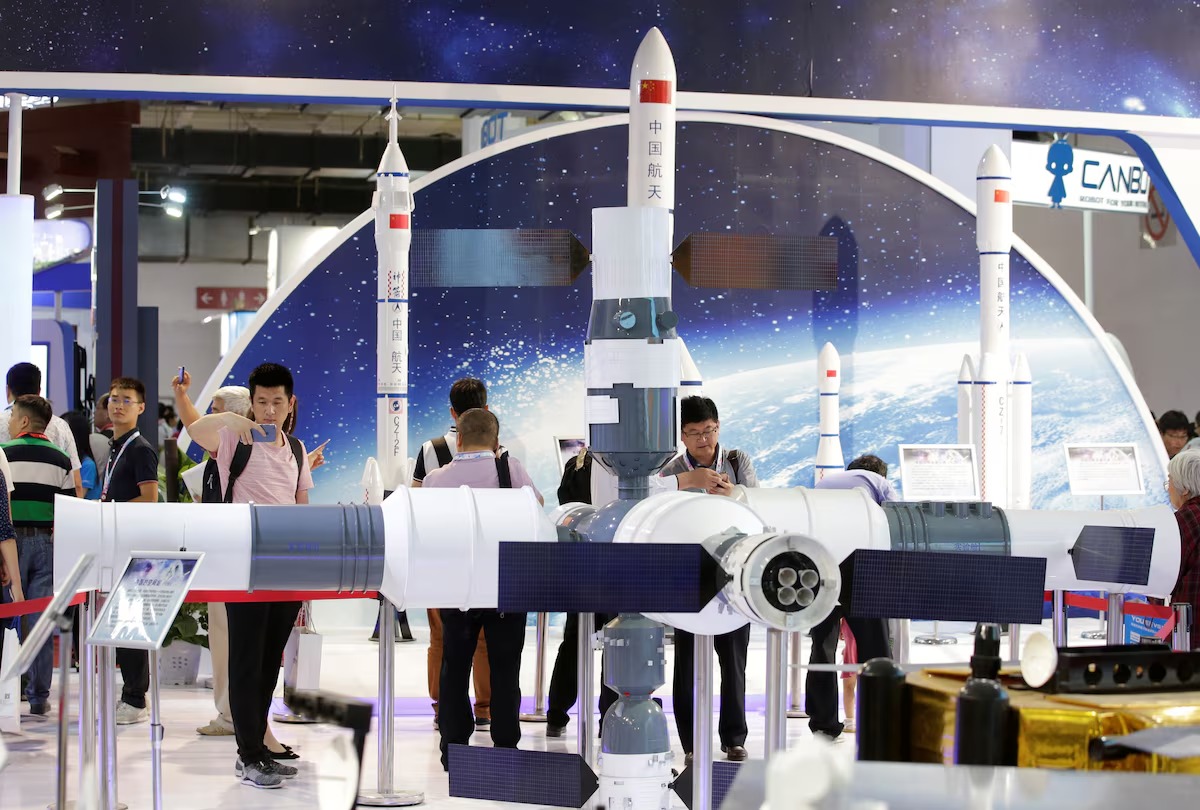
Theo Hãng tin Reuters, truyền thông nhà nước Trung Quốc ngày 29-1 đưa tin nước này dự kiến xây dựng các trung tâm dữ liệu trí tuệ nhân tạo (AI) trong không gian trong vòng năm năm tới.
Động thái này được xem là thách thức trực tiếp đối với kế hoạch phát triển các trung tâm dữ liệu ngoài Trái đất của tỉ phú Elon Musk thông qua Công ty SpaceX.
Tập đoàn Khoa học và Công nghệ hàng không vũ trụ Trung Quốc (CASC) cam kết sẽ “xây dựng cơ sở hạ tầng trí tuệ số trong không gian ở quy mô gigawatt”, theo lộ trình phát triển năm năm được Đài CCTV dẫn lại.
Ngoài ra nhà thầu chủ lực trong lĩnh vực không gian của Trung Quốc cũng đặt mục tiêu hiện thực hóa các chuyến bay du lịch vũ trụ dưới quỹ đạo và từng bước phát triển du lịch quỹ đạo trong cùng giai đoạn.
Các trung tâm dữ liệu vũ trụ mới sẽ tích hợp điện toán đám mây, điện toán biên và các thiết bị đầu cuối, hướng tới sự hợp nhất sâu giữa năng lực tính toán, lưu trữ và băng thông truyền tải.
Hệ thống này cho phép dữ liệu từ Trái đất được xử lý trực tiếp trong không gian, thay vì phải truyền về các trạm mặt đất.Nguồn vốn này sẽ được dùng để phát triển các trung tâm dữ liệu AI trên quỹ đạo, nhằm khắc phục hạn chế về năng lượng trên mặt đất.
Phát biểu tại Diễn đàn Kinh tế thế giới ở Davos (Thụy Sĩ) tuần trước, ông Elon Musk cho biết SpaceX có kế hoạch phóng các vệ tinh trung tâm dữ liệu AI chạy bằng năng lượng mặt trời trong vòng hai đến ba năm tới.
Theo ông, việc sản xuất điện mặt trời trên quỹ đạo có thể tạo ra lượng năng lượng gấp năm lần so với các tấm pin đặt trên mặt đất.
Trung Quốc và Mỹ hiện đang cạnh tranh quyết liệt trong nỗ lực biến thám hiểm không gian thành một ngành kinh doanh thương mại khả thi, tương tự hàng không dân dụng.
CASC tuyên bố sẽ đưa Trung Quốc trở thành cường quốc không gian hàng đầu thế giới vào năm 2045. Tuy nhiên, thách thức lớn của Bắc Kinh là các thử nghiệm tên lửa tái sử dụng vẫn chưa hoàn thiện.
Ngược lại, tên lửa Falcon 9 của SpaceX đã giúp công ty con Starlink gần như chiếm ưu thế tuyệt đối trong lĩnh vực vệ tinh quỹ đạo thấp (LEO). Khả năng tái sử dụng được xem là yếu tố then chốt để giảm chi phí phóng.
Trung Quốc năm ngoái đã đạt kỷ lục 93 vụ phóng, nhờ sự phát triển nhanh của các công ty khởi nghiệp trong lĩnh vực hàng không vũ trụ thương mại.
Kế hoạch của CASC được công bố ngay sau khi Trung Quốc khánh thành Học viện Điều hành liên hành tinh, cho thấy tham vọng chuyển dịch chiến lược từ quỹ đạo gần Trái đất sang thám hiểm không gian sâu.
Mốc một tỷ USD để định giá một startup thành công, gọi là “kỳ lân”, đang trở nên lỗi thời trong nửa thập kỷ qua khi công nghệ bùng nổ.
Trong The Social Network (2010), bộ phim kể về quá trình hình thành Facebook và các tranh chấp pháp lý xung quanh nhà đồng sáng lập Mark Zuckerberg, có đoạn liên quan đến mục tiêu của mạng xã hội. “Một triệu USD không phải điều tuyệt vời”, một người nói với nhân vật Zuckerberg (do Jesse Eisenberg thủ vai). “Anh biết điều gì mới thực sự tuyệt không? Đó là mức định giá một tỷ USD”.
Sau 16 năm, Facebook đổi tên thành Meta và đạt giá trị 1.600 tỷ USD. Còn khi đó, một công ty được định giá một tỷ USD hiếm đến mức được gọi là kỳ lân.

Thuật ngữ Kỳ lân (Unicorn) dùng để mô tả một công ty khởi nghiệp tư nhân có giá trị vốn hóa thị trường ít nhất một tỷ USD, lần đầu tiên được nhà đầu tư mạo hiểm nổi tiếng Aileen Lee đặt ra vào năm 2013 vì những doanh nghiệp đạt cột mốc như vậy rất hiếm và khó tìm khi đó. Nhưng ngày nay, “thấy” kỳ lân không còn là điều gì đó huyền thoại nữa.
Thực tế, mọi thứ đang thay đổi nhanh chóng. Theo công ty nghiên cứu công nghệ và vốn thị trường Pitchbook, chỉ riêng năm 2021, một năm trước khi ChatGPT xuất hiện và làm bùng nổ làn sóng AI, hơn 630 kỳ lân đã được hình thành. Tính đến hết năm 2025, có 1.569 kỳ lân đang hoạt động. Trong khi đó, dữ liệu của công ty phân tích CB Insights cho thấy, có hơn 1.300 công ty khởi nghiệp về AI được định giá trên 100 triệu USD trong 10 tháng đầu năm 2025 với 498 kỳ lân.
Theo báo cáo 100 Kỳ lân toàn cầu (Global Top 100 Unicorns) được công ty kiểm toán – tư vấn PwC công bố tháng 11/2025, tổng giá trị của 100 kỳ lân hàng đầu đạt 2.949 tỷ USD, tăng so với 2.054 tỷ USD của năm trước. 100 kỳ lân này đều có mức định giá từ 8 tỷ USD trở lên – vượt xa mốc một tỷ USD tối thiểu để trở thành kỳ lân, 5 cái tên hàng đầu đạt mức định giá hơn 100 tỷ USD và 43 trong số này hoàn thành vòng gọi vốn trong năm 2025.

Theo Rest of World, việc bùng nổ kỳ lân cho thấy các tiêu chuẩn ban đầu dần lỗi thời. Trang này chỉ ra, sự bùng nổ của các kỳ lân bắt đầu từ những năm 2010, khi lãi suất thấp kỷ lục tạo ra dòng vốn khổng lồ từ các quỹ đầu tư mạo hiểm đổ xô vào công ty khởi nghiệp, bị cuốn vào cuộc đua “tăng trưởng bằng mọi giá”. Tình hình được đẩy lên cao trào bởi đại dịch Covid-19. Các biện pháp phong tỏa hạn chế khả năng đi lại của nhà đầu tư khiến các thương vụ lớn nhanh chóng đàm phán qua Zoom, trong khi cổ phiếu công nghệ được hưởng lợi từ tâm lý rằng mọi người sẽ sống gắn liền với máy tính trong tương lai gần.
Có thể nhìn vào quỹ Tiger Global để thấy sự “suy thoái của phẩm chất kỳ lân” so với cách đây hơn chục năm. Năm 2021, đây là nhà đầu tư mạo hiểm năng suất nhất thế giới với chiến lược “spray-and-pray” (rải tiền và cầu nguyện) dù cách làm này đi kèm nhiều rủi ro. Họ sẵn sàng chi tiền nhanh, bỏ qua nhiều quy trình thẩm định khắt khe để giành quyền góp vốn vào startup tiềm năng.Nhưng những sai lầm lộ diện sau đó. Trước bối cảnh lãi suất tăng vọt cùng biến động địa chính trị đã khiến làn sóng “vung tiền” một cách dễ dãi chấm dứt. Khi đại dịch lắng xuống, những công ty khởi nghiệp từng dựa vào các đợt đầu tư liên tiếp để tồn tại rơi vào tình trạng khó khăn, sa thải hàng loạt, thậm chí đóng cửa.
Một số vụ đầu tư của Tiger Global đã thất bại thảm hại, chẳng hạn nền tảng tiền điện tử FTX sụp đổ, còn người sáng lập Sam Bankman-Fried bị kết tội gian lận; hay công ty công nghệ giáo dục Byju’s của Ấn Độ, từng được quỹ này đầu tư và định giá 22 tỷ USD, phá sản giữa hàng loạt vụ kiện tụng. Tiger Global cũng giảm mạnh 56% vốn đầu tư trong năm 2022. Năm 2023, họ chỉ thực hiện 40 thương vụ đầu tư mạo hiểm, trong khi năm trước đó là 300 thương vụ. Cùng năm, chỉ 133 công ty khởi nghiệp tỷ USD được thành lập.
Tuy nhiên, sự bùng nổ của AI giúp các khoản đầu tư lớn trở lại, dù chưa thể bằng mức đỉnh như năm 2021. Tiger Global sau đó đã đầu tư vào một số công ty AI sau này trở thành kỳ lân, như Scale AI, OpenAI. “Sự sẵn có của vốn tư nhân, bối cảnh kinh tế vĩ mô ổn định và sự quan tâm mạnh mẽ của nhà đầu tư vào lĩnh vực như AI hay công nghệ tài chính (fintech) tạo nền tảng vững chắc cho sự hình thành kỳ lân”, Kat Kravtsov, Giám đốc thị trường vốn của PwC tại Anh, cho biết trên blog.
Theo số liệu của ngân hàng UBS, tổng chi tiêu toàn cầu cho AI ước đạt 375 tỷ USD trong năm 2025 và được dự báo lên tới 500 tỷ USD năm nay. Trước con số này, một số chuyên gia lạc quan, nhưng số khác đánh giá việc chi tiêu quá đà đang hình thành “bong bóng AI”.
“Giá tài sản tăng vọt và định giá quá cao cho thấy bong bóng AI là kết quả có khả năng xảy ra nhất”, Jared Bernstein, cựu chủ tịch Hội đồng cố vấn Kinh tế Nhà Trắng, nói với CNBC.
“Khi một bong bóng hình thành, số phận của những kỳ lân mà nó tạo ra sẽ ra sao? Liệu có ai rút ra được bài học?”, Rest of World đặt câu hỏi.